Skip to content

Blog

Insights, tutorials and best practices from our development team.

Tech giants are already moving toward AI-first – but how can QA management keep up?

Tech giants are already moving toward AI-first – but how can QA management keep up?

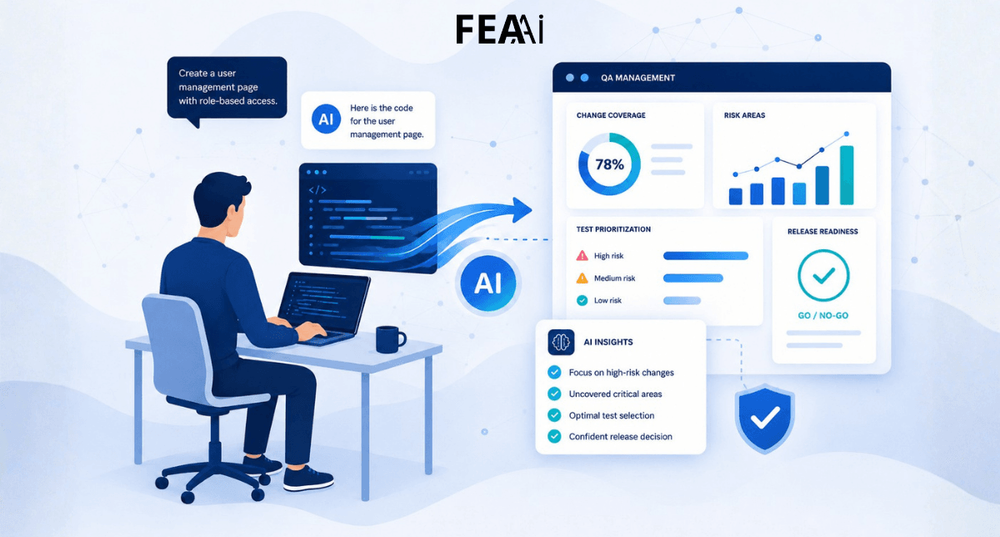
AI is reshaping software development by accelerating code generation and shortening release cycles. As more code is produced with AI assistance, quality assurance must adapt to a faster and more complex development environment. The focus is shifting from traditional testing toward risk-based, data-driven QA management that supports better decisions about software quality. In an AI-first development model, keeping pace increasingly depends on how effectively organizations can identify and manage quality risks.

Read more →
Why do so many AI implementations fail to deliver results?

Why do so many AI implementations fail to deliver results?

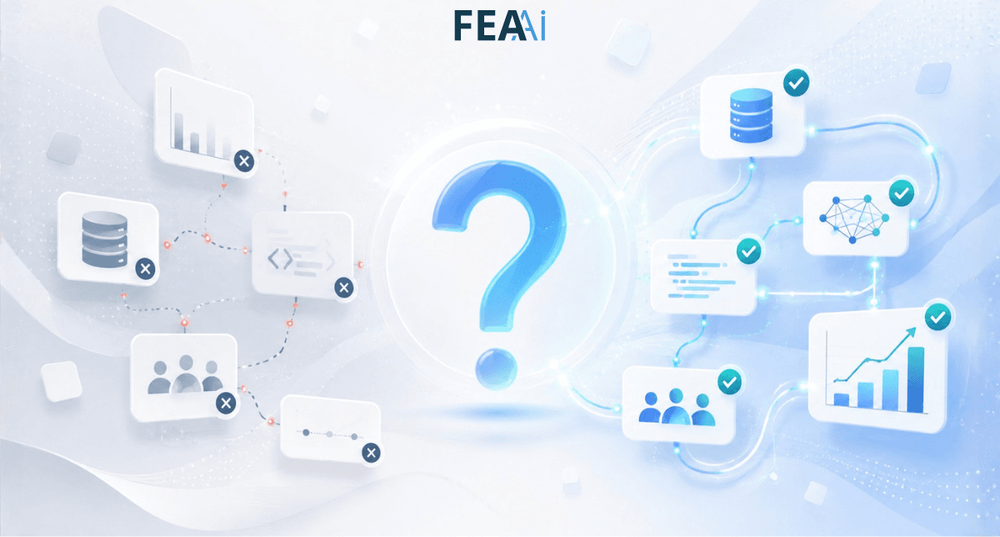
Many AI initiatives look promising in pilot projects but fail to create measurable business value once introduced into everyday operations. The problem is often not the technology itself, but weak integration with business processes, limited management support, fragmented ownership, and low organizational adoption. Off-the-shelf solutions can add further complexity when they do not reflect how the company actually works.

Read more →
After AI-first development, is AI-first QA management next?

After AI-first development, is AI-first QA management next?

AI is accelerating software development, but faster code generation also increases the pressure on quality assurance. As development cycles shorten, QA teams need more than additional tests: they need better data to understand what changed, where the risks are, and whether a release is truly ready. AI-first QA is therefore less about replacing testers and more about enabling faster, more targeted, and data-driven decisions.

Read more →
 What is vibe coding and how is it turning the software industry upside down?

What is vibe coding and how is it turning the software industry upside down?

Vibe coding is making software creation faster and more accessible than ever, but speed alone does not guarantee reliability. As AI takes over more of the coding process, the real challenge shifts toward defining requirements clearly, validating results, and controlling risk. The future of development may depend less on who can write code fastest and more on who can verify it most effectively.

Read more →
AI has accelerated coding. Could QA become the next bottleneck?

AI has accelerated coding. Could QA become the next bottleneck?

AI is accelerating software development, but faster coding does not automatically mean faster or safer releases. As more code is generated in less time, QA teams face growing pressure to verify changes without slowing down delivery. The real competitive advantage may no longer come from producing code faster, but from knowing which changes matter, what needs to be tested, and when a release is truly ready.

Read more →
How can the business impact of production defects be reduced from a QA management perspective?

How can the business impact of production defects be reduced from a QA management perspective?

Production defects can create more than technical disruption. They can affect customer experience, increase support and development costs, and damage business performance. This article looks at how QA management can reduce the impact of escaped defects through risk based testing, clear metrics, early involvement, better communication, and continuous learning. It also shows why strategic QA is essential for protecting business goals in modern software development.

Read more →
AI in testing: Speed or false sense of security?

AI in testing: Speed or false sense of security?

Artificial intelligence is no longer just revolutionizing coding but also transforming software testing. More and more tools promise to generate automated tests within minutes – tests that previously could take hours or even days to create. At first glance, this is a huge advantage: testers can react more quickly to changes, regression coverage increases, and development cycles accelerate. It’s no surprise that many companies are already experimenting with these solutions. But the key question remains: how reliable are these AI-generated tests in practice?

Read more →
How to build a transparent quality assurance management process?

How to build a transparent quality assurance management process?

Balancing fast software releases with stable operation is no longer a minor technical concern, but a business factor. As development organizations grow, isolated testing practices can quickly become difficult to oversee, and the associated risks increase as well. A deliberately structured quality assurance management approach can centralize data, make critical points visible, and turn progress into something measurable. Risk-based prioritization and continuous measurement do not slow down release cycles; they make them more controlled. The real question is not whether quality assurance is necessary, but at what level of maturity it operates within the organization.

Read more →
Software quality as a competitive advantage

Software quality as a competitive advantage

New apps and systems appear online every day. But only a few of them achieve lasting market success. What makes a product successful while others fail? The answer is often one word: quality. Software quality is not just a technical requirement, it is also a business advantage. A reliable, stable, and user-friendly application earns users’ trust and gives companies a long-term edge in the market.

Read more →
It no longer just answers, it acts too: the age of AI agents has arrived

It no longer just answers, it acts too: the age of AI agents has arrived

AI agents are changing the way companies think about artificial intelligence: instead of simply answering questions, they can increasingly carry out complete tasks and workflows. By connecting to existing business systems, they can retrieve data, prepare actions, and support day-to-day operations with growing autonomy. This shift also brings new requirements around integration, access control, supervision, and human approval. The article explores what agent-based AI means in practice and why it is becoming an increasingly important part of enterprise software development.

Read more →